Learn how to build fast, scalable APIs using FastAPI. This beginner-friendly guide covers installation, async programming, validation with Pydantic, authentication with JWT, and more.
🌟 Introduction: Why FastAPI is the Future of Python Web Development
If you’re just starting your journey into backend or API development, FastAPI is the perfect framework to begin with. FastAPI has quickly gained popularity for its speed, modern features, and ease of use.
It supports asynchronous programming, auto-generates documentation, and is great for microservices, ML APIs, and web backends. In short, it’s the top Python API framework to learn in 2024.
💡 Why Developers Love FastAPI (Especially Beginners)
- Speed: As fast as Node.js or Go, thanks to async support.
- Interactive Docs: Swagger UI & ReDoc auto-generated at
/docsand/redoc. - Less Boilerplate: Build more with fewer lines of code.
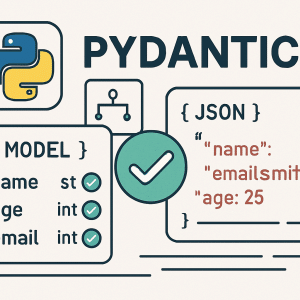
- Input Validation: Pydantic models catch errors before they break your app.
- Built-in Security: Supports OAuth2, JWT, and more.
🛠️ Step-by-Step: How to Start a FastAPI Project
🔧 Install FastAPI and Uvicorn
pip install fastapi uvicornFor all optional features:
pip install fastapi[all]🖥️ Create Your First App
from fastapi import FastAPI

app = FastAPI()

@app.get("/")
async def read_root():
    return {"message": "Welcome to FastAPI!"}

@app.get("/items/{item_id}")
def get_item(item_id: int, q: str = None):
    return {"item_id": item_id, "query": q}
▶️ Run Your App
uvicorn main:app --reloadVisit localhost:8000/docs for Swagger UI.
⚙️ Async Programming: The Key to Fast Performance
import asyncio
from fastapi import FastAPI

app = FastAPI()

@app.get("/async-task")
async def perform_async():
    await asyncio.sleep(1)
    return {"status": "done"}
Use async def for I/O tasks (e.g. DB/API calls). Use def for CPU-bound logic.
🚀 Pro Tips for Boosting FastAPI Performance
- Use async libraries for DB and HTTP calls
- Cache frequent responses (e.g., Redis)
- Enable connection pooling for database
- Run
gunicorn -k uvicorn.workers.UvicornWorkerfor production - Use Docker + Kubernetes for scaling
📦 Pydantic: Handling Request Validation with Ease
from pydantic import BaseModel, EmailStr
from typing import Optional

class User(BaseModel):
    name: str
    email: EmailStr
    age: Optional[int] = None

@app.post("/users/")
async def create_user(user: User):
    return user
Pydantic makes data validation easy. Invalid data gets a detailed error response automatically.
🔐 JWT Authentication with FastAPI
from fastapi import Depends, HTTPException, status
from fastapi.security import OAuth2PasswordBearer
import jwt

oauth2_scheme = OAuth2PasswordBearer(tokenUrl="token")

async def get_current_user(token: str = Depends(oauth2_scheme)):
    try:
        payload = jwt.decode(token, "your_secret_key", algorithms=["HS256"])
        username: str = payload.get("sub")
        return username
    except jwt.PyJWTError:
        raise HTTPException(
            status_code=status.HTTP_401_UNAUTHORIZED,
            detail="Invalid credentials",
        )
This is a basic example of JWT token validation for secure APIs.
🚀 Going Live: How to Deploy Your FastAPI App
- Use
Uvicorn + Gunicornwith multiple workers - Containerize with Docker
- Add logging, CORS, and HTTPS
- Deploy on AWS, Azure, or GCP
📌 Final Thoughts
FastAPI is one of the best frameworks for developers starting out with Python web development. It’s fast, scalable, and simple to learn.
✅ Summary:
- Beginner-friendly syntax and structure
- High performance and async support
- Built-in validation, docs, and security
- Ready for production use
📚 Keep Learning
Resources to explore next: